

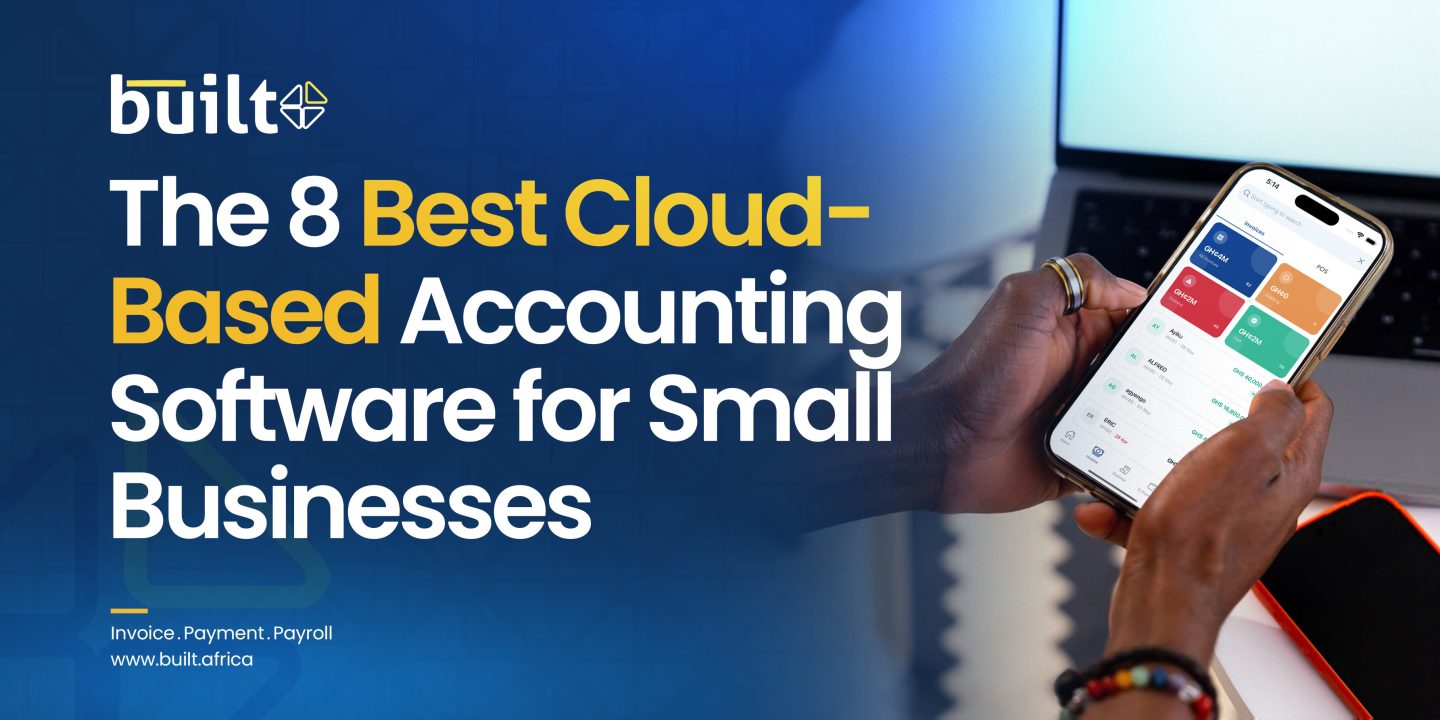
Doing the books by hand was fine when your business was still small enough to track on a single spreadsheet. It doesn’t anymore. Between chasing invoices, tracking expenses, and prepping for tax season, doing the books by hand now costs you more time than it saves. Cloud accounting solves this: a secure online system that gives you real time access to your finances from any device, anywhere. Automated bank feeds, easier collaboration with your accountant, and instant insights into your cash flow mean less guesswork and faster decisions. As more SMEs go digital, cloud accounting has shifted from a nice to have to a baseline requirement for staying compliant and ready for growth. We have rounded up the 8 best cloud based accounting platforms for small businesses in 2026 to help you find the right one.
1. Built (Best Overall All-in-One Platform)
While global giants offer standard bookkeeping tools, Built stands out by offering a powerful, localized all-in-one financial ecosystem specifically tailored for SMEs and startups. It bridges the gap between classic cloud accounting and full-scale retail and operational business management.
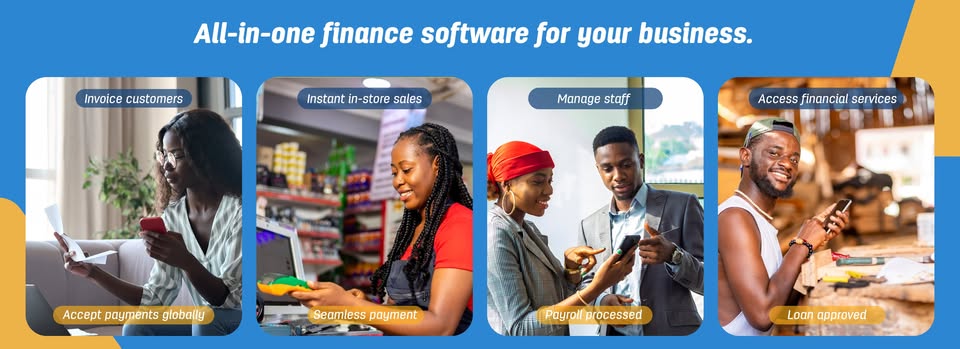
Instead of forcing small business owners to juggle separate applications for point of sale (POS), payroll, and basic accounting, Built packages everything natively. Additionally, it offers a hybrid approach through Virtual Accountants, giving growing enterprises remote access to dedicated, qualified human professionals who proactively handle cash flow monitoring, tax compliance, and financial advisory.
- Pros:
- Completely centralized all-in-one ecosystem (Invoicing, Expenses, Payroll, CRM, Budgets, and Credit Access).
- Retail-ready POS integration that auto-syncs with inventory management.
- Unique Virtual Accountant services for hands-off tax filing and advisory.
- Advanced features like CFO AI insights and mobile-app functionality.
- Cons:
- Localized optimization makes it best suited for fast-growing African markets and emerging startups.
2. QuickBooks Online (Best for General Reporting)
Developed by Intuit, QuickBooks Online is a globally recognized standard in digital accounting. It offers detailed reporting structures and highly functional tax-season document exportation, making it a reliable choice for businesses with strict, traditional reporting demands.
- Pros:
- Robust reporting tools with deep inventory tracking capabilities.
- Massive network of certified accountants worldwide.
- Welcomes multiple currencies and integrates with hundreds of third-party apps.
- Cons:
- Can have a steep learning curve for non-accountants.
- Pricing can scale up aggressively as you add more users or features.
3. Tyms (Best for Modular Accounting automation)
Tyms is an emerging force focusing heavily on automated workflows and modular accounting systems. It specializes in reducing manual entry burdens for fast-moving businesses by focusing on digital data intake and automated ledger reconciliation.
- Pros:
- Clean user interface designed around automation.
- Excellent for modern businesses trying to cut down on repetitive manual tasks.
- Cons:
- Smaller ecosystem compared to long-standing global industry giants.
- Fewer native operational tools (like built-in CRM or unified POS).
4. Xero (Best for Collaborative Efficiency)
Xero is celebrated for its collaborative, user-friendly workspace. It allows multiple users to log into one account simultaneously without messy permission conflicts, offering a “business snapshot” tool that displays real-time cash flow health.
- Pros:
- Seamless third-party application ecosystem and open API.
- Smooth bank feed reconciliations and clean multi-user access permissions.
- Cons:
- The entry-level starter plan places strict limits on the number of monthly transactions you can process.
5. Akaunting (Best Open-Source Alternative)
For tech-savvy business owners or those seeking ultimate control over their data infrastructure, Akaunting is a free, open-source cloud accounting platform. It covers basic invoicing, expense tracking, and reporting needs globally.
- Pros:
- Free core software with an open-source framework you can self-host.
- Highly modular marketplace where you buy only the specific apps you need.
- Cons:
- Requires a bit of technical knowledge to optimize and maintain.
- Customer support relies heavily on forums and documentation rather than a live helpdesk.
6. Sage (Best for Traditional Scalability)
Sage Business Cloud Accounting brings corporate-grade security and reliability down to the small business scale. It is widely respected by traditional accountants for its adherence to strict data compliance and corporate bookkeeping standards.
- Pros:
- Exceptional data security encryption and robust compliance features.
- Accurate general ledger management.
- Cons:
- The interface can feel a bit rigid and overly corporate compared to modern, sleek alternatives.
- Advanced features are often locked behind more expensive subscription tiers.
7. Selbby (Best for Micro-Merchants)
Selbby focuses tightly on minimal, lightweight accounting needs. It is built for small traders, independent contractors, and solo founders who want zero clutter and just the bare essentials to record basic incoming and outgoing revenue.
- Pros:
- Very fast setup time and straightforward user flow.
- Great for micro-businesses that do not need extensive inventory tracking.
- Cons:
- Lacks the heavy-duty features required to run a full corporate or retail enterprise as you scale.
8. Zoho Books (Best for Team Productivity Suite Integration)
Part of the expansive Zoho productivity ecosystem, Zoho Books excels at cross-department data sharing. If your business already relies on Zoho’s emails, CRMs, or project trackers, adding Zoho Books ties everything together cleanly.
- Pros:
- Deeply customizable Client Portal for easier invoice access and vendor billing.
- Excellent tier options including an entry free tier for micro-entities.
- Cons:
- To get the full value of the software, you often need to commit to the broader, paid Zoho software suite.
How to Choose the Right One
There’s no single “best” accounting software, only the best fit for your business. Ask yourself:
- Where do you operate? If you’re in Ghana, Nigeria, or elsewhere in Africa, a platform like Built or Tyms will handle local tax and mobile money realities that global tools often ignore.
- Do you need more than accounting? If payroll, POS, or CRM are also on your wish list, an all-in-one platform saves you from stitching together five different subscriptions.
- What’s your budget? Akaunting and Zoho Books offer real free tiers; Sage and QuickBooks reward bigger budgets with deeper features.
- Do you want human backup? Built’s virtual accountants are a rare middle ground between “figure it out yourself” and “hire a full-time CFO.”
Whichever you choose, the goal is the same: less time chasing numbers, more time running your business.
Ready to simplify your books? Try Built free for 30 days, no credit card required.

This is managed by the marketing department




No Comments