

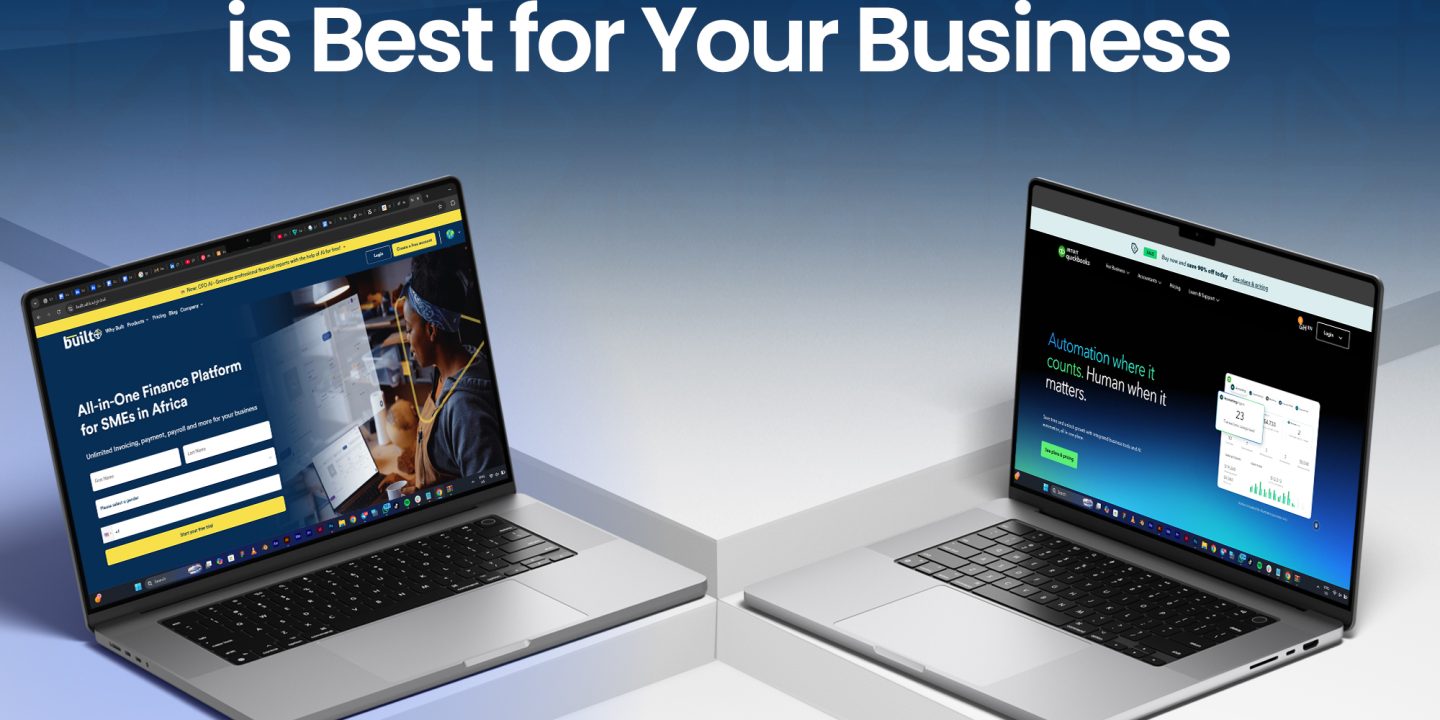
Choosing the right business or accounting software is one of the most important decisions a business can make. From managing daily transactions to generating reports for informed decision-making, the right platform can significantly improve efficiency and financial clarity. Two solutions that often stand out in this space are Built, an Africa-focused all-in-one business software, and QuickBooks, one of the most widely used accounting tools globally.
This article breaks down the features, strengths, and differences between Built and QuickBooks to help you decide which platform best suits your business needs.
1. Overview of Each Platform
What is Built?
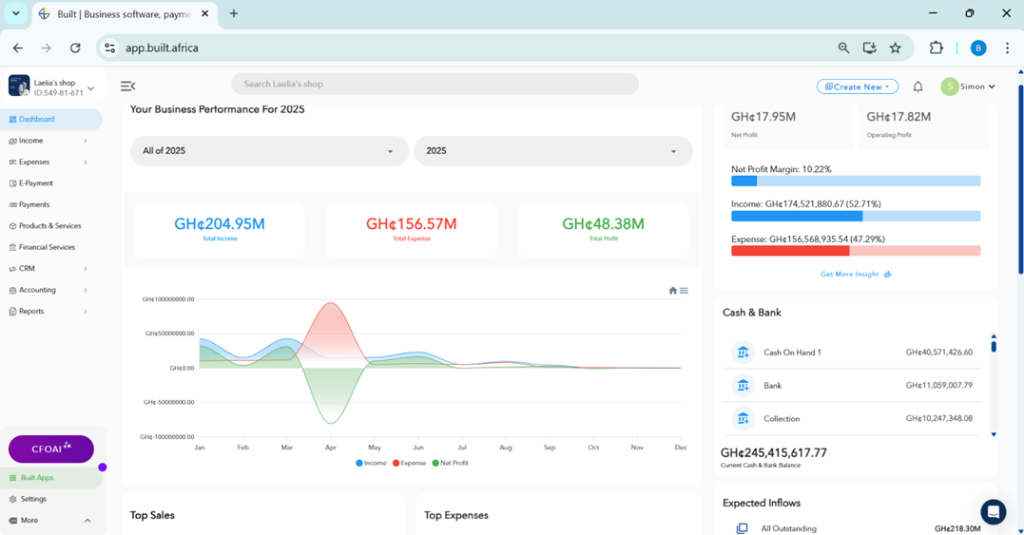
Built is an all-in-one business and accounting software designed specifically for SMEs and startups across Africa. It brings together essential tools for financial and operational management, including invoicing, expenses tracking, POS & inventory, payroll automation, payments, and CRM – all in one smart platform. Built’s strength lies in its simplicity, mobile-first approach, and alignment with local tax systems and payment platform, all embedded in the software.
What is QuickBooks?
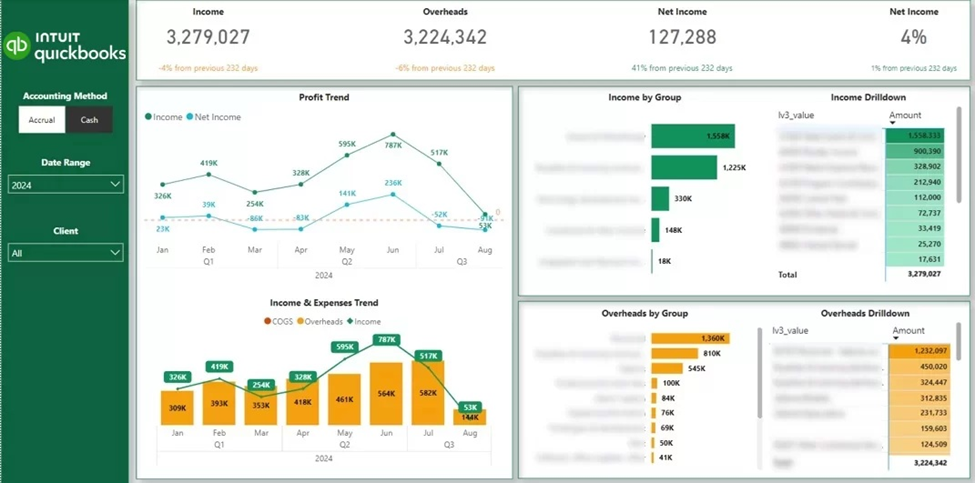
QuickBooks, developed by Intuit, is an accounting solution used across industries. Known for its bookkeeping tools, financial reporting, and integrations, QuickBooks serves small to medium-sized businesses. It focuses on accounting functions such as bookkeeping, expense management, bank reconciliation, and financial reporting, with additional features available through add-ons and third-party apps.
2. Key Features Comparison
Invoicing & Billing
- Built: Provides simple, fast invoicing tailored for African SMEs. Users can create, share, and track invoices on both mobile and web. The system also offers invoice customization, recurring billing, and automated reminders
- QuickBooks: Offers invoice customization, recurring billing, and automated reminders.
Expense Tracking
- Built: Allows seamless recording of expenses, categorized for easier reporting and tax preparation. Designed to help businesses monitor day-to-day spending with minimal complexity.
- QuickBooks: Features expense categorization, receipt scanning, and automatic bank feeds for seamless expense tracking.
Inventory & POS
- Built: Comes with built-in POS and inventory management, making it ideal for retail, wholesale, and product-based businesses. All sales automatically sync with financial records.
- QuickBooks: Provides basic inventory features on certain plans. However, advanced inventory requires higher-tier subscriptions or third-party tools.
Payroll Management
- Built: Automates payroll with support for local taxes, statutory deductions, and pension contributions, making it extremely relevant for African businesses.
- QuickBooks: Offers payroll management, but availability and compliance depend on the country. Some regions require add-ons or integrations.
Reporting & Analytics
- Built: Generates easy-to-understand reports like profit & loss, cash flow, sales reports, expenses, and more, perfect for SMEs looking for simplicity.
- QuickBooks: Known for its financial reporting, offering granular, accountant-level insights and customizable dashboards.
Payments
- Built: Integrates local payment options to make invoice collections seamless. Businesses can accept payments directly from clients across multiple channels with the click of a button.
- QuickBooks: Supports a wide range of global payment gateways, with functionality varying by region.
CRM & Business Management
- Built: Includes a CRM module to help manage leads, track customer interactions, and support sales pipelines, reducing the need for an external CRM.
- QuickBooks: Limited CRM functionality unless connected with third-party solutions.
3. Ease of Use
User Experience & Interface
- Built: Simple, intuitive, and mobile-first, making it easy for SMEs and non-accountants to operate.
- QuickBooks: Feature-rich and powerful, but may feel complex for beginners or small teams without accounting knowledge.
Setup & Onboarding
- Built: Quick onboarding at signup tailored to local business requirements, taxes, and workflows.
- QuickBooks: Longer setup process due to global scope and advanced settings, especially for businesses with complex accounting needs.
4. Integrations & Ecosystem
- Built: Integrates with popular African payment systems and essential business tools, creating a unified operational experience.
- QuickBooks: Offers a massive global ecosystem with hundreds of integrations, ideal for businesses already using international software stacks.
5. Pricing Comparison
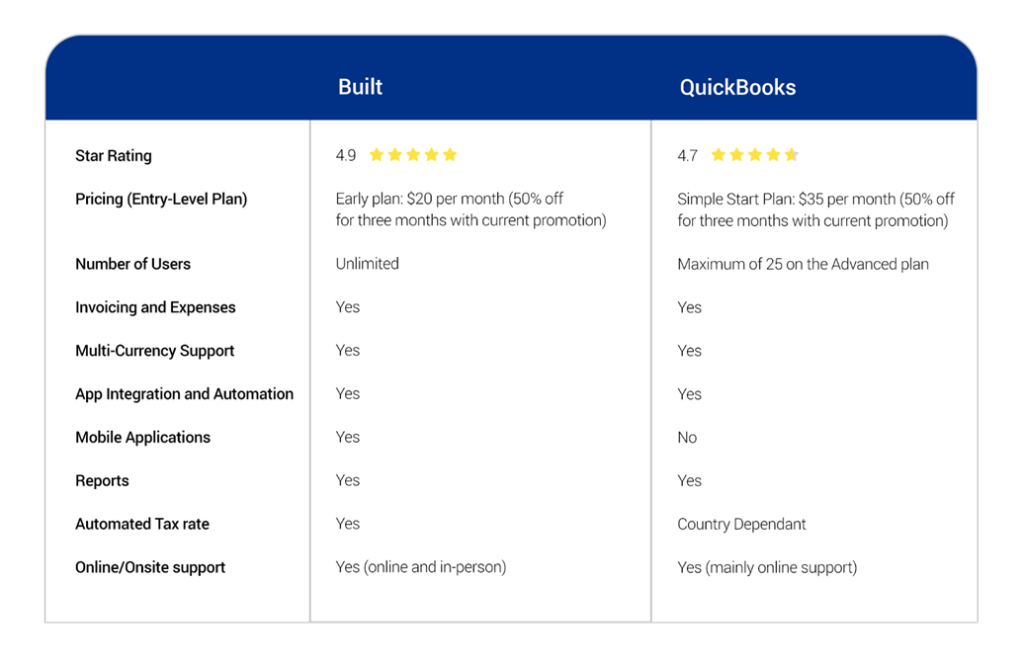
- Built: Affordable pricing designed for African SMEs. Offers excellent value by combining multiple tools (Invoice, POS, payroll, CRM, payments, CFOAi, employee portal) into one platform. Depending on the size of business, (Small, Medium or large). Built prices its packages from $5 to $20; basic to advanced feature.
- QuickBooks: Higher pricing, especially when factoring in add-ons, third-party integrations, or advanced features.
6. Customer Support
- Built: Offers truly local, people-first support. Our team understands how African businesses work, and we’re always just a call away; Monday to Friday, weekends, and even public holidays. Whether you need help, advice, or an in-person visit at your shop or office, our friendly customer service and sales teams are always ready to support you.
- QuickBooks: Extensive knowledge base and global support, though service quality may vary by region.
7. Which Software is Best for You?
Choose Built if you:
- Are an SME or startup in Africa
- Want an all-in-one solution (accounting, Invoice, POS, inventory, payroll, payments, CRM)
- Need a platform adapted to local taxes and payment systems
- Prefer simple, mobile-friendly software
8. Conclusion
Both Built and QuickBooks are powerful tools, each designed with different audiences in mind. Built shines as a localized, all-in-one business software perfect for African SMEs looking for simplicity and seamless operations. QuickBooks, on the other hand, delivers advanced global accounting capabilities suited for businesses with more complex financial needs.
Your choice ultimately depends on your business size, location, industry, and how much complexity you’re ready to manage.


This is managed by the marketing department









No Comments